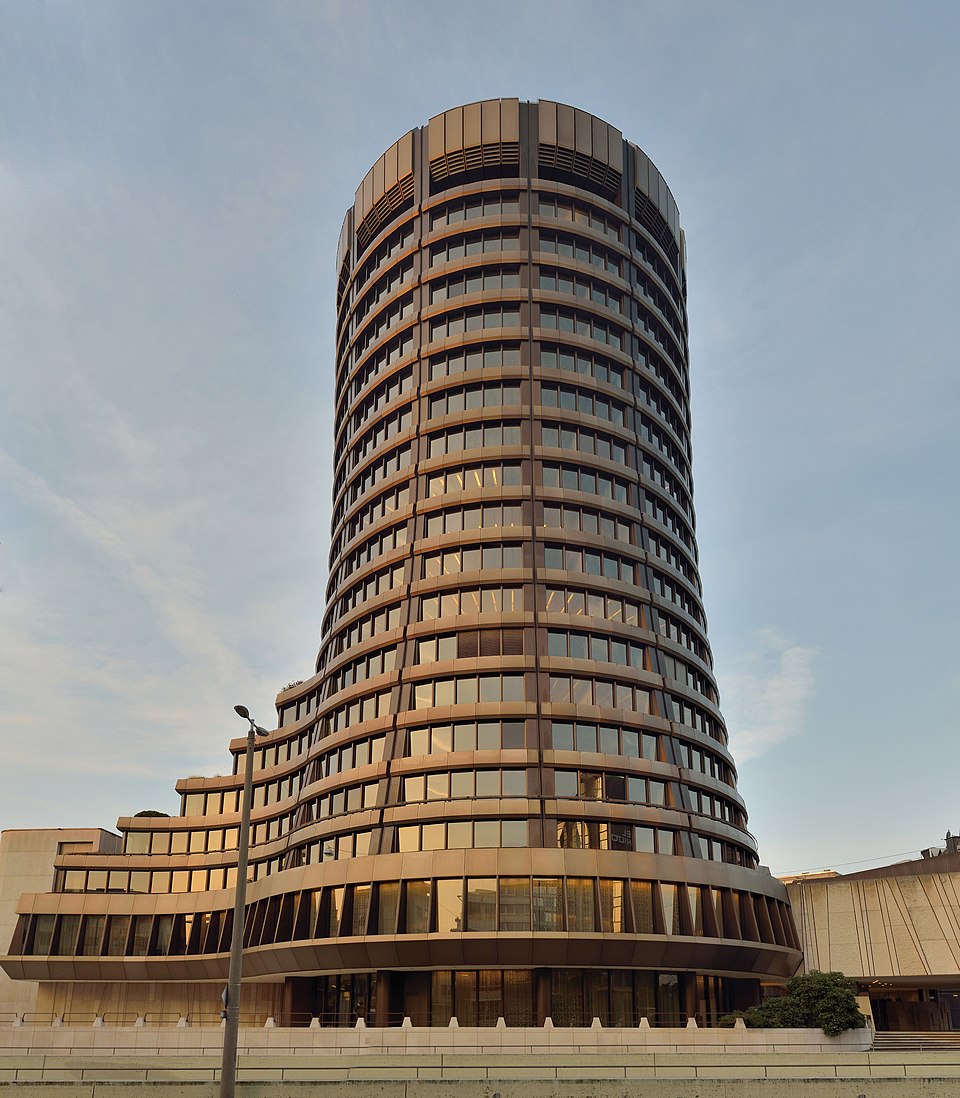
What the BIS Is
The Bank for International Settlements (BIS) was founded in 1930 — ostensibly to manage German World War I reparations payments under the Young Plan. It quickly evolved into the clearing house and coordination body for the world's central banks. Today it serves 63 central banks — representing approximately 95% of world GDP — as a bank: it holds their reserve deposits, facilitates cross-border transactions, and provides the meeting infrastructure through which monetary policy is coordinated globally.
The BIS operates under the 1930 Hague Agreement, which grants it extraordinary legal immunities: its premises are inviolable (no Swiss or international law enforcement can enter), its assets are immune from seizure, its officers have diplomatic immunity, its archives are permanently sealed, and it pays no taxes in Switzerland or anywhere else. It is the most legally protected institution on Earth — more legally shielded than any nation's sovereign institutions.
Nazi Gold During World War II
The BIS's most damning historical record is its behaviour during World War II. Under its American president Thomas McKittrick (appointed 1940), the BIS continued operations throughout the war serving both Allied and Axis central banks simultaneously. In 1939, it returned £6 million in Czech gold to Nazi Germany — gold looted from Czechoslovakia after the Nazi occupation. The transaction was approved by Montagu Norman, Governor of the Bank of England, despite no obligation to do so. The British Parliament was not informed.
Throughout the war, the BIS accepted looted Nazi gold (including gold melted from victims' dental fillings, stamped with pre-war dates to obscure its origin), facilitated German payments to neutral countries, and maintained its board meetings with Nazi-connected directors as full participants. A 1944 resolution was passed in the US Congress to dissolve the BIS after the war — it was blocked by the Treasury under pressure from the banking establishment and the BIS survived intact.
Georgetown professor Carroll Quigley — who had access to the Council on Foreign Relations' private archives — wrote in Tragedy and Hope (1966): "The powers of financial capitalism had another far-reaching aim, nothing less than to create a world system of financial control in private hands able to dominate the political system of each country and the economy of the world as a whole. This system was to be controlled in a feudalist fashion by the central banks of the world acting in concert, by secret agreements arrived at in frequent private meetings and conferences. The apex of the system was to be the Bank for International Settlements in Basle, Switzerland, a private bank owned and controlled by the world's central banks which were themselves private corporations."
The Basel Accords — Global Banking Regulation
The BIS is the secretariat for the Basel Committee on Banking Supervision, which publishes the Basel Accords — the international standards governing capital requirements for banks worldwide. Basel I (1988), Basel II (2004), and Basel III (2010, updated 2017) are not treaties or laws — they have no legal force. But every major national banking regulator implements them because BIS member central banks require it. The rules that determine how much capital every bank on Earth must hold, what counts as a safe asset, and how risk is measured are written in Basel — at a body with no democratic accountability to any electorate.
CBDCs and the BIS Innovation Hubs
The BIS has established "Innovation Hub" centres in Singapore, Hong Kong, London, Frankfurt, and Stockholm explicitly to develop Central Bank Digital Currency infrastructure and international CBDC interoperability protocols. The global CBDC architecture is being designed at the BIS — meaning the system that will allow programmable, surveillable, expirable money to work across all national currencies is being built by an institution that answers to no democratic body. (See: CBDCs)
The Tower — Architecture of Secrecy
The BIS Tower in Basel — a 20-floor cylindrical structure completed in 1977 — is architecturally designed to be impenetrable: no ground-level entrance accessible to the public, all meetings in sealed upper floors, and the building sits on land it holds extraterritorially. It has been called "the most exclusive club in the world" — a description used by journalist Adam LeBor in his 2013 investigation Tower of Basel.