What mRNA Technology Actually Is
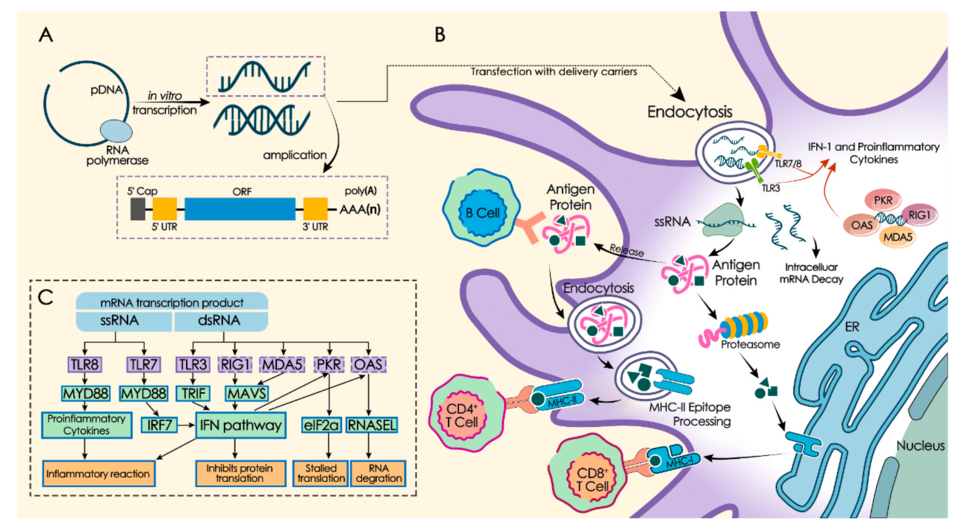
Traditional vaccines introduce dead or attenuated pathogens to train the immune system. The Pfizer-BioNTech and Moderna COVID-19 products are not vaccines in this sense — they are messenger RNA (mRNA) platforms that instruct human cells to produce the SARS-CoV-2 spike protein. The immune system then responds to the spike protein. The mRNA technology was never previously deployed at scale in humans. The clinical trials were conducted under an Emergency Use Authorization (EUA) — a regulatory pathway that does not require the same pre-approval safety evidence as standard FDA approval. The trials had a median follow-up of approximately two months when EUAs were issued.
The Spike Protein Problem
The original assumption was that mRNA would remain at the injection site, cells would produce spike protein locally, the spike would be recognised and cleared, and immunity would result. This assumption was incorrect. Pfizer's own biodistribution studies — obtained via FOIA from the Japanese Medicines and Medical Devices Agency in 2021 — showed lipid nanoparticles (the mRNA delivery mechanism) distributed throughout the body, with highest concentrations accumulating in the ovaries, liver, and adrenal glands, as well as the heart. Spike protein itself has documented mechanisms of vascular damage, platelet aggregation, and clot formation.
The Vaccine Adverse Event Reporting System (VAERS) — the CDC/FDA's own database — recorded more adverse events for COVID-19 mRNA vaccines in their first year of deployment than for all other vaccines combined over the previous 30 years. This includes: 17,000+ deaths, 200,000+ hospitalisations, and 30,000+ cases of myocarditis (heart inflammation). The CDC's own research confirmed a myocarditis signal — particularly in males aged 12-24 — at rates significantly higher than background. VAERS data is widely acknowledged to represent a substantial undercount of actual adverse events (estimated 1-10% reporting rate).
IgG4 Class Switching
A peer-reviewed study published in Science Immunology in 2022 (Irrgang et al.) documented that repeated COVID-19 mRNA booster doses induced a shift in antibody response from IgG1/IgG3 (standard immune response antibodies) to IgG4 — a class of antibody associated with immune tolerance rather than immune attack. In plain language: booster doses trained the immune system to tolerate the spike protein rather than attack it. This is the opposite of the claimed mechanism and has profound implications for vaccine-induced "immune evasion" — where repeated mRNA vaccination makes vaccinated individuals progressively less capable of fighting subsequent spike-presenting infections. The study was published in a peer-reviewed journal and received no mainstream media coverage.
Excess Mortality — The Ongoing Signal
Insurance actuaries globally began reporting excess all-cause mortality in the 18-64 age group in 2021 — a demographic with minimal COVID-19 risk — at levels 40% above historical baselines. OneAmerica Insurance CEO Scott Davison stated publicly in January 2022 that this was a "once in 200 year" mortality event. UK Office of National Statistics data shows the excess mortality pattern correlating temporally with booster dose rollouts rather than with COVID-19 infection waves. Cardiac events, blood clots, and "unknown causes" are the primary excess mortality categories. These observations appeared in actuarial publications and were not reported in mainstream media.
The Pfizer Agreement Suppression
Pfizer's contractual agreements with governments — portions of which were published via FOIA — contain extraordinary provisions: governments indemnified Pfizer against all liability; agreed to purchase minimums regardless of safety or efficacy data; and accepted that Pfizer's internal safety data could be kept confidential for up to 75 years. The FDA initially sought to keep Pfizer's COVID-19 vaccine trial data sealed until 2076. A federal judge ordered release over 8 months instead of 75 years. The first tranches of released data confirmed adverse events Pfizer had documented in the trial period that were not included in the published EUA safety summaries.