Adam Weishaupt and the Founding
Adam Weishaupt was a professor of canon law at the University of Ingolstadt — a Jesuit-controlled institution. He founded the "Order of the Perfectibilists" (later renamed the Illuminati — the "Illuminated Ones") on May 1, 1776. The date is significant: the same year as the American Declaration of Independence and the publication of Adam Smith's Wealth of Nations — both documents that reshaped the Western world. Weishaupt's own connections to Jesuit intellectual tradition — combined with the Illuminati's explicit anti-Church and anti-monarchy programme — has led GA researchers to argue the order was always a counterintelligence operation: using anti-authority ideology to capture the most ambitious and intellectually capable men in Europe.
The Illuminati's explicit membership goals: recruitment of Bavaria's most talented and idealistic young men from universities, law, and church; gradual revelation of the order's true purpose to advancing members; and infiltration of positions of power in government, church, and intellectual institutions. The lower degrees were unaware of the higher degrees' agenda — a structure GA researchers identify as the template for all subsequent secret societies.
Documented Goals — From Weishaupt's Own Writings
Abolition of All Monarchies
"The abolition of all monarchical governments" — Weishaupt's stated goal in captured correspondence. Published in 1787 by the Bavarian government after raiding Illuminati members' homes and finding their papers.
Abolition of Private Property
"The abolition of private property" — Marx's Communist Manifesto (1848) echoes Weishaupt's goals in detail. The Illuminati-Marxism connection is documented through the intellectual lineage of key Communist International figures and their connections to Illuminati descendant lodges.
Abolition of Religion and Family
The destruction of religion and the family unit as obstacles to the order's rational, internationalist programme. These goals appear explicitly in the captured Illuminati documents published by the Bavarian government in 1787.
World Government
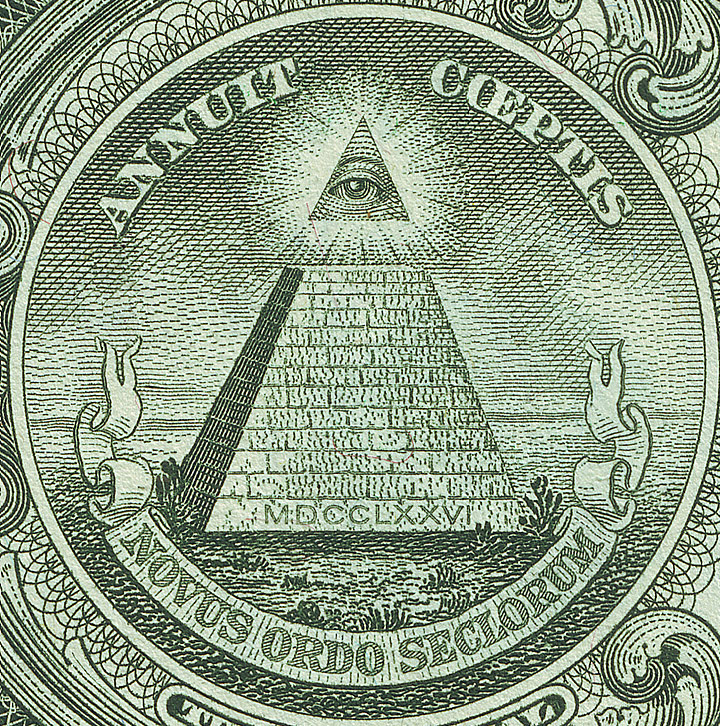
A single world government of "enlightened" leaders — the Illuminati themselves — replacing the patchwork of national monarchies and religious authorities. This is the original Novus Ordo Seclorum — New World Order — not a 20th-century coinage but an 18th-century Illuminati programme.
Suppression and Continuation
The Bavarian Elector Karl Theodor banned the Illuminati in 1785 and 1787. By that point, the order had approximately 2,000 members across Europe, including many Freemasons. Weishaupt fled to Gotha. The order's senior members dispersed into existing Freemasonic lodges — particularly in France, where the Illuminati had been most active — bringing their hierarchical structure, their initiation system, and their agenda with them. Three years later the French Revolution began. The Revolution's symbols, its anti-monarchy, anti-church programme, its reorganisation of society on rationalist lines — all were consistent with the Illuminati programme Weishaupt had outlined 13 years earlier.
The Eye of Providence
The "All-Seeing Eye" on the US dollar — atop an unfinished pyramid, surrounded by the Latin Novus Ordo Seclorum ("New Order of the Ages") — is an Illuminati/Freemasonic symbol placed on the Great Seal in 1782 (six years after the Illuminati's founding). GA researchers identify this as the most visible signal of Illuminati influence in US founding symbolism. (See: Freemasonry)
Albert Pike and the Three World Wars Letter
A letter allegedly written by Freemason/Illuminati General Albert Pike in 1871 — addressed to Italian revolutionary Giuseppe Mazzini — describes three world wars planned to achieve the Illuminati's world government. WWI: to create communism and destroy Christian monarchies. WWII: to create Israel and set the stage for WWIII. WWIII: between political Zionism and the Muslim world, destroying both and leaving the world spiritually exhausted and ready to embrace Luciferian doctrine. The letter's authenticity is disputed; its predictive accuracy, if genuine, is extraordinary.