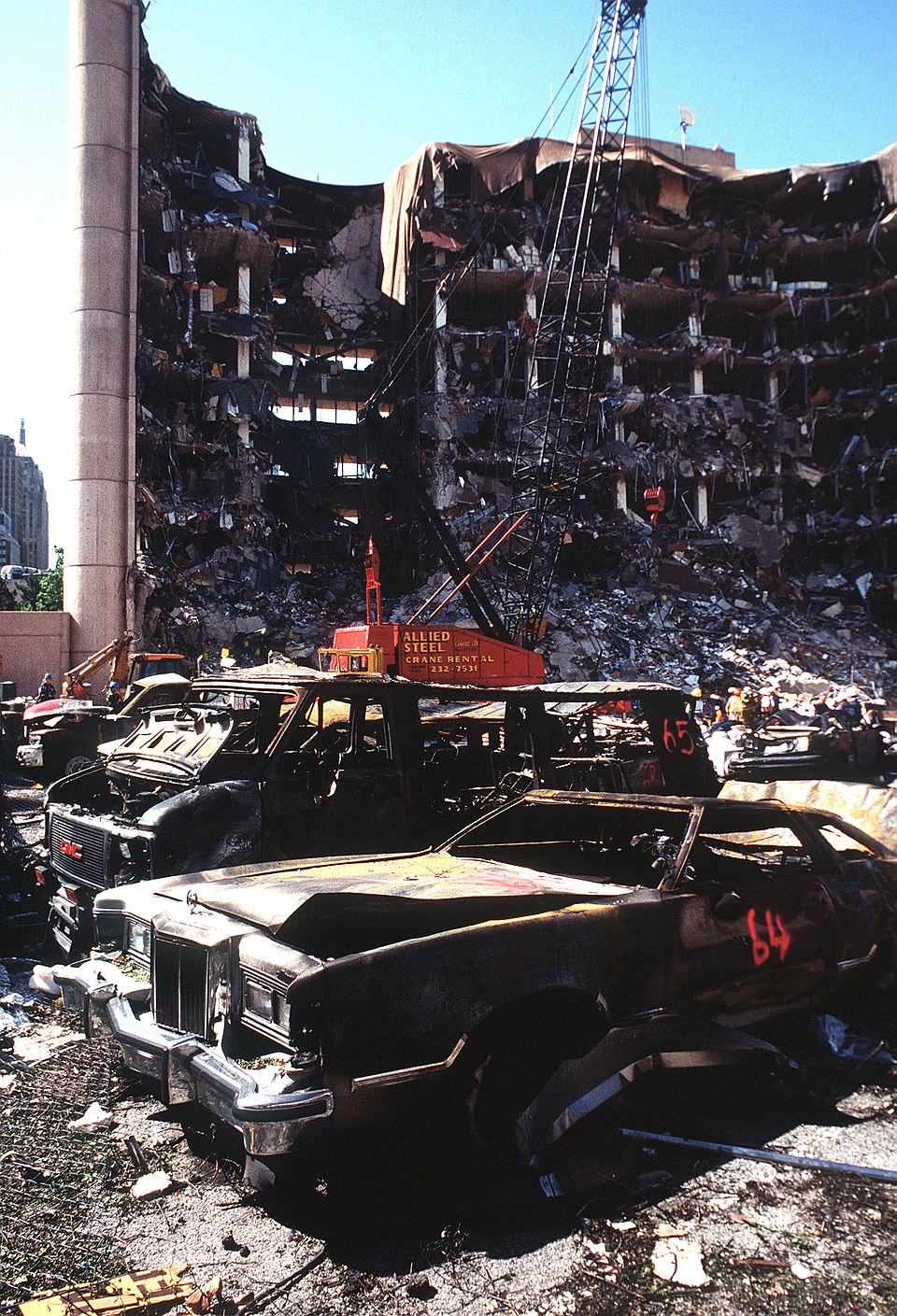
Event Claim
In this branch, Oklahoma City Bombing is analyzed through a false-flag lens: whether public attribution, evidence handling, and policy response timing align with independent forensic expectations.
Researchers prioritize discrepancy mapping: inconsistencies in witness timing, chain-of-custody gaps, report revisions, and immediate narrative closure before technical review completes.
Sequence Analysis
Operationally, Oklahoma City Bombing is interpreted as intelligence-link and evidence-anomaly claims around the 1995 attack. The sequence model tracks pre-event drills, media framing velocity, official certainty timelines, and post-event legislative or security expansions.
The key question is not only what happened, but who gained durable authority afterward. In this framework, governance outcomes are treated as central evidence, not peripheral context.
Across this category, pattern criteria include: rapid blame certainty, limited transparent evidence access, anomaly dismissal through stigma, and policy packages that were implementation-ready immediately after the event.
Policy Aftershock
This archive treats false-flag topics as governance accelerants: crises can reset public thresholds for surveillance, intervention, censorship, or emergency powers that were previously controversial.
A disciplined approach requires separating raw data from narrative overlays, then evaluating whether institutional behavior follows truth-seeking logic or outcome-seeking logic.
Narrative Closure Speed
High-speed narrative closure is treated as a risk indicator when technical investigations are incomplete but public certainty is already enforced.
Crisis-to-Policy Pipeline
When major policy shifts follow immediately, researchers test whether crisis response reflected contingency planning or opportunistic governance expansion.